Skip to Main Content Skip to Footer Content

Air Duct Cleaning in Pensacola, FL

Duct cleaning is useful when ducts contain significant debris, but it won’t fix leaks or moisture problems causing it. We inspect with a camera before quoting, so you know what’s actually needed. Sometimes that means cleaning; other times, sealing is the better fix. Cleaning without fixing that is a service you will buy again.

We’d rather do the smaller job that works.

Aire Serv of Northwest Florida, locally owned, licensed CAC1823566.

Call or schedule online.

Air Duct Cleaning in Pensacola, FL
Aire Serv technician standing in front of an Aire Serv van.

Let Us Call You

By checking this box, I agree to opt in to receive automated SMS and/or MMS messages from Aire Serv, a Neighborly company, and its franchisees to the provided mobile number(s). Messages & data rates may apply. Message frequency varies. View Terms and Privacy Policy. Reply STOP to opt out of future messages. Reply HELP for help.

By entering your email address, you agree to receive emails about services, updates or promotions, and you agree to the Terms and Privacy Policy. You may unsubscribe at any time.

  • Duct cleaning is aggressively upsold in this industry and genuinely necessary in a specific set of situations that are common on the Gulf Coast. Both things are true.

    Visible biological growth is the clearest one. Mold or mildew on duct interior surfaces, on the evaporator coil, or in the drain pan. In a climate where indoor humidity regularly exceeds the threshold the EPA advises for mold control, this is the most common legitimate reason here.

    After a moisture event: a roof leak over the ductwork, a flood, stormwater intrusion, or a condensate overflow that reached the ducts. Wet insulation and wet duct interiors do not recover on their own.

    Rodent or insect infestation, meaning nesting material, droppings, and the odor that comes with them. That is a cleaning problem and a sealing problem at once, because something got in through an opening that remains.

    After construction or renovation. Drywall dust is fine, abrasive, and gets everywhere, and builders do not typically address it.

    Visible debris blowing from registers when the system starts. Persistent musty odor traced specifically to the ducts rather than the coil or pan. And a home you just bought from an owner whose habits you do not know.

    What connects most of these is an event rather than a schedule. Something happened, whether water, animals, construction, or a period of neglect, and the ducts hold the result. That framing is the useful one. If you can name the event, cleaning probably has a purpose. If you cannot name one and your system is otherwise sound, the honest answer is usually that your money belongs somewhere else.

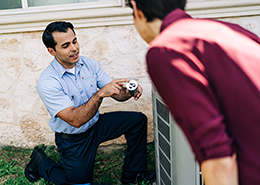
Aire Serv technician on a ladder showing a customer an issue with their air vent.

When We Will Tell You Not To

We say this on site rather than cleaning ducts that do not need it, and it happens regularly.

Ducts that are merely dusty. Some settled dust on the interior surface of a duct is normal and it is not circulating. The EPA's own position is that duct cleaning has never been shown to prevent health problems in routine circumstances and that it should be performed when conditions warrant rather than on a schedule.

As a fix for a humidity problem. Cleaning removes particulate and does nothing to moisture. If your house feels damp, the answer is dehumidification, duct sealing, or correct system sizing.

As a fix for high energy bills. Cleaning does not meaningfully change airflow in a system with intact ducts. Leakage does, because escaping conditioned air is the actual loss, and that is a different service entirely.

As a fix for one room that never gets cool. That is almost always a disconnected run, a crushed section, an undersized return, or a design problem.On an annual schedule. There is no reason to clean ducts every year in a normally functioning home. If someone is selling you a recurring duct cleaning subscription, ask what they expect to find each year.

We inspect with a camera before quoting for exactly this reason. You see what we see. If there is growth, you get the image. If the ducts are clean and your actual problem is leakage or a fouled coil, you get that image too, along with a recommendation for the thing that will solve your complaint.

The Method Matters More Than the Price

Where cleaning is warranted, how it is performed determines whether it helps or hurts. Blowing compressed air into a register and calling it duct cleaning is common in this market, and it relocates contamination rather than removing it.

Containment comes first. The home is protected, registers are sealed off, and the system is locked out so it cannot run during the work.

Then negative pressure on the trunk. A HEPA-filtered collection unit connects to the main trunk line, putting the entire duct system under suction so everything dislodged travels toward the vacuum rather than into your living space. This is the step that determines whether the job works, and it is the step that gets skipped on a cheap quote.

Mechanical agitation follows. Rotating brushes and compressed air tools work interior surfaces systematically through supply runs, return runs, and trunk lines, because contamination adhered to duct walls does not come off with suction alone.

The coil, blower, and drain pan are part of the job rather than an add-on, since cleaning ducts while leaving a fouled coil in place recontaminates the system. A new filter goes in, and we verify the filter actually seals rather than allowing air to bypass around the frame, which is a very common cause of recontamination.

Ask any company what they attach to the trunk line and what filtration is on it.

When Duct Cleaning Is Genuinely Warranted

Visible biological growth. Mold or mildew on duct interior surfaces, on the evaporator coil, or in the drain pan. In a climate where indoor humidity regularly exceeds the threshold the EPA advises for mold control, this is the single most common legitimate reason here.

After a moisture event. A roof leak over the ductwork, a flood, storm water intrusion, or a condensate overflow that reached the ducts. Wet insulation and wet duct interiors do not recover on their own.

Rodent or insect infestation. Nesting material, droppings, and the odor that comes with them. This is not a cleaning problem alone, it is a sealing problem too, since they got in somehow.

After construction or renovation. Drywall dust is fine, abrasive, and gets everywhere. If your home was recently built or remodeled and the system ran during construction, the ducts hold that.

Visible debris blowing from registers. Actual particulate coming out when the system starts.

Persistent musty odor traced to the ducts. Distinguishing this from a coil or drain pan source matters, because the coil and pan are far cheaper to address.

A previous owner of unknown habits. Smoking, pets, or long neglect, particularly in a home you just bought.

When Duct Cleaning Is Genuinely Warranted
Aire Serv technician sitting in the driver's seat of an Aire Serv van.

When It Is Not Worth It

We will tell you this on site rather than cleaning ducts that do not need it.

Ducts that are merely dusty. Some settled dust on the interior surface of a duct is normal and it is not circulating. The EPA's own position is that duct cleaning has never been shown to prevent health problems in routine circumstances, and that it should be done when there is an identifiable reason rather than on a schedule.

As a fix for a humidity problem. Cleaning removes particulate. It does nothing to moisture. If your house feels damp, the answer is dehumidification, duct sealing, or correct system sizing.

As a fix for high energy bills. Cleaning does not meaningfully change airflow in a system with intact ducts. Duct sealing does, because leakage is the actual loss.

As a fix for one room that never gets cool. That is almost always a disconnected run, a crushed section, an undersized return, or a design problem. See duct repair and replacement.

On a schedule, annually. There is no reason to clean ducts every year in a normally functioning home. If someone is selling you an annual duct cleaning subscription, ask what they expect to find.

If we cannot get a camera in. In some homes with fully inaccessible duct runs, an honest inspection is not possible and we will say so rather than quoting blind.

How We Inspect Before Quoting

This is the part that separates an honest quote from a template.

A camera goes into the accessible trunk and branch runs. We are looking for actual contamination, biological growth, moisture staining, debris volume, damage, and disconnections. We also check the evaporator coil and drain pan, because those are frequently the real source of a musty odor complaint and they are far less expensive to address than a whole-system cleaning.

You see what we see. If there is growth, you get the image. If the ducts are clean, you get that image too, and a recommendation for whatever is actually causing your complaint.

We are also looking for the cause. Contamination has a reason: a leak drawing attic air, a moisture source, a failed filter seal allowing bypass, or an animal entry point. Cleaning without addressing the cause is temporary.

How the Cleaning Is Performed

Where cleaning is warranted, the method matters. Blowing compressed air into a register and calling it duct cleaning is common in this market and it moves contamination around rather than removing it.

Containment first. The home is protected, registers are sealed off, and the system is locked out so it cannot run during the work.

Negative pressure on the trunk. A HEPA-filtered collection unit connects to the main trunk line, putting the entire duct system under suction. Everything dislodged travels toward the vacuum rather than into your living space. This is the step that determines whether cleaning helps or hurts, and it is the step that gets skipped on cheap jobs.

Mechanical agitation. Rotating brushes and compressed air tools work the interior surfaces systematically through supply runs, return runs, and trunk lines. Contamination adhered to duct walls does not come off with suction alone.

HEPA extraction. Dislodged material is captured at the collection unit. True HEPA filtration captures 99.97 percent of particles at 0.3 microns, which covers mold spores and fine dust rather than redistributing them.

Coil, blower, and drain. Cleaning ducts while leaving a fouled evaporator coil and a contaminated drain pan in place recontaminates the system. These are part of the job, not an add-on.

New filter and a seal check. A new filter goes in, and we verify the filter seals rather than allowing bypass around the frame, which is a very common cause of recontamination.

Antimicrobial treatment, when justified. Where biological growth was present, an EPA-registered antimicrobial can be applied. Where it was not, we skip it. It is not a default line item, and any product used is EPA-registered for the application.

Most homes take several hours depending on size and contamination. You get before and after images.

The Part Most Contractors Skip

Finding why it happened.

Duct leakage pulling attic air, with everything in the attic, straight into your supply. This is the most common cause in newer construction and it is the reason duct sealing is usually the better investment.

Moisture. Sustained high indoor humidity, a condensate overflow, a roof leak, or condensation on cold duct surfaces from failed insulation. See duct insulation and dehumidification.

Filter bypass. Air going around the filter instead of through it, which is common with an ill-fitting filter or a poorly sealed filter rack. A high-efficiency filter that bypasses is worse than a cheap one that seals.

Animal entry points. If something got in, the opening is still there.

Physical damage. Disconnected boots, crushed runs, and torn flex are entry points as well as airflow problems. See duct repair and replacement.

We document what we find and quote the fix separately, so you can see what cleaning costs and what preventing recurrence costs, and decide on each.

Related Services

Written by the team at Aire Serv of Northwest Florida.
Technically reviewed by Justin B., NATE-certified and EPA 608 certified, 19 years in the trade.
Reviewed for accuracy by owner Justin Sonntag, a 26-year Gulf Coast resident.
Florida Certified Air Conditioning Contractor, license CAC1823566.

Last reviewed: August 2026

Questions about your system? Call or book online in about a minute.

The Aire Serv Advantage

From tune-ups and maintenance to heater repair and air conditioning replacement, we provide services that keep the air you breathe clean and keep your home or business at the perfect temperature.

Worry-Free HVAC Starts with Our Advantage Plan

Keep your system running smoothly with expert care you can count on.

Aire Serv of Northwest Florida

  • Avalon
  • Bellview
  • Brent
  • Cantonment
  • Chumuckla
  • Cordova Park
  • Dickerson City
  • East Milton
  • Ensley
  • Ferry Pass
  • Floridatown
  • Garcon Point
  • Gonzalez
  • Goulding
  • Gulf Breeze
  • Harold
  • Holley
  • Milton
  • Myrtle Grove
  • Navarre
  • Navarre Beach
  • Oriole Beach
  • Pace
  • Pea
  • Pensacola
  • Roeville
  • Tangen Heights
  • Tiger Point
  • Wallace
  • Woodlawn Beach

Air Duct Cleaning Questions

  • It depends on the size of the home, how much ductwork there is, how accessible it is, and the level of contamination. Attic runs in a two-story home are a different job than a single-story slab home with a short trunk. We inspect with a camera before quoting rather than pricing over the phone, because the honest answer sometimes turns out to be that you do not need it. If a company quotes you a flat price for whole-house duct cleaning without seeing your ducts, they are quoting a script rather than a job.

Worry-Free HVAC Starts with Our Advantage Plan

Keep your system running smoothly with expert care you can count on.

Schedule Online

By checking this box, I agree to opt in to receive automated SMS and/or MMS messages from Aire Serv, a Neighborly company, and its franchisees to the provided mobile number(s). Messages & data rates may apply. Message frequency varies. View Terms and Privacy Policy. Reply STOP to opt out of future messages. Reply HELP for help.

By entering your email address, you agree to receive emails about services, updates or promotions, and you agree to the Terms and Privacy Policy. You may unsubscribe at any time.